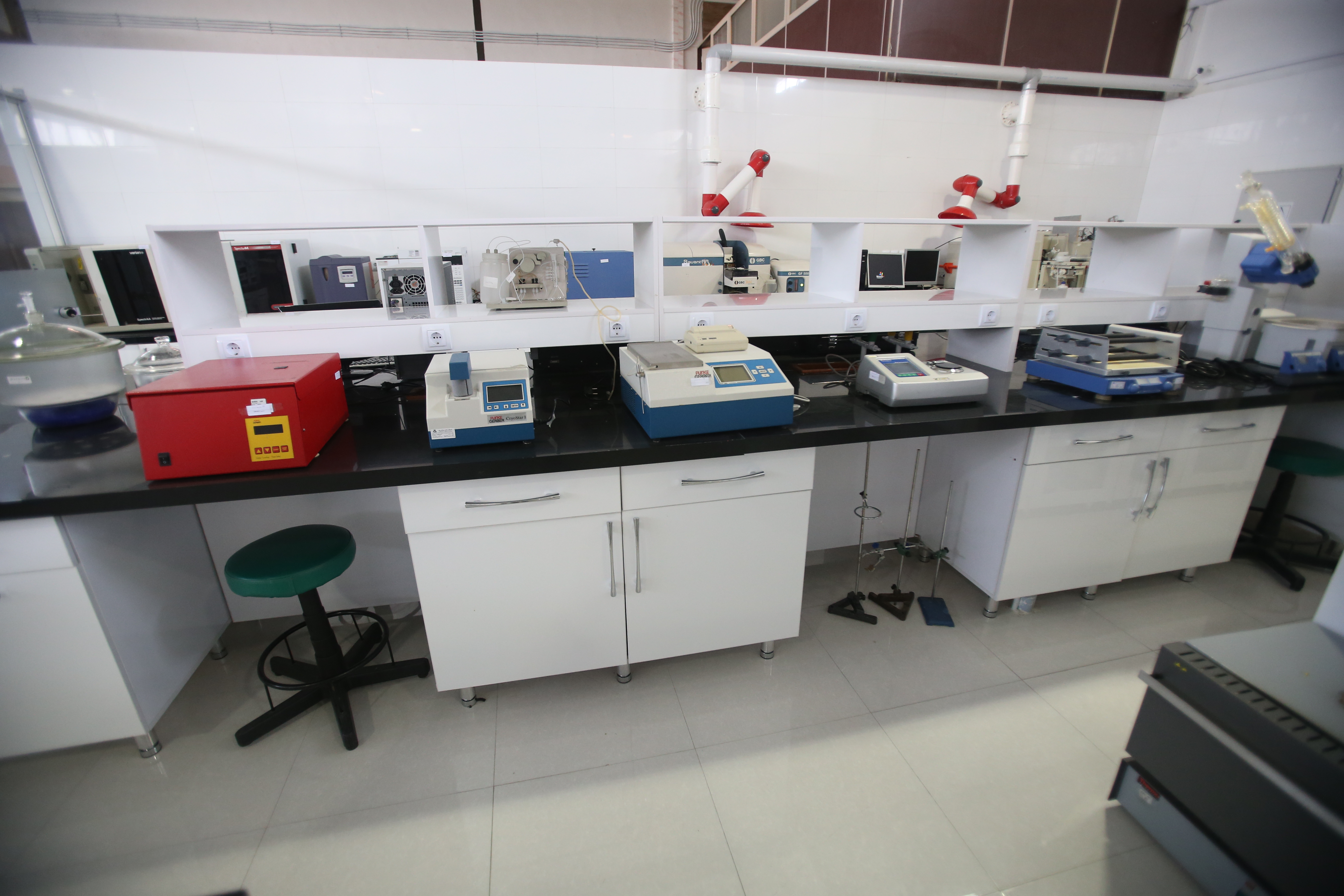
Kish Free Zone’s Food, Drug and Standards Laboratory began operating in the presence of local and national officials.
The inauguration of Kish’s first Food, Drug and Standards Laboratory was attended by the Economic Deputy of Kish Free Zone Organization, Kish’s Friday Prayer Leader, the Sunni Friday Prayer Leader, the head of the National Accreditation Center of Iran, the Director General of Standards for Hormozgan and the head of Kish Standards Office. Mohammad Reza Saeedi described monitoring standards for goods, processes and services at entry points, during production and in the marketplace as one of the most difficult, complex and important tasks because it directly affects people’s quality of life.
He said that effective supervision, control and standards work helps improve quality of life.
The Economic Deputy of Kish Free Zone Organization said that the success of standards depended on establishing a culture of standards. Embedding that culture would create further opportunities for success.
Emphasizing food and drug control and conformity with Iran’s religious and cultural principles, he expressed hope that sound planning, skilled staff, appropriate structures and monitoring technologies would help Kish Standards Office continue to improve residents’ quality of life.
Saeedi described the memorandum of understanding with the Education Department as a valuable step toward promoting standards. Education about standards, he said, should take place not only in schools and at an early age, but also through the media and community organizations.
He expressed hope that the office’s work would ensure that the quality of goods and services reaching the public met residents’ expectations.
He also announced the expansion of standards supervision into urban development, civil engineering and construction on Kish Island, following the example of leading countries in this field.
Thanking the private-sector investor who had begun working in this area on Kish, Saeedi said that some sectors involved considerable risk and that investment in them was valuable.
Kish’s Friday Prayer Leader said that those assessing quality must act fairly and impartially toward both the public and providers of goods and services. Strengthening public confidence in standards was the best way to demonstrate their importance. The true role of standards in daily life would become clear when people could select goods or services with full confidence in the standard mark.
The head of the National Accreditation Center of Iran praised the efforts of Kish Standards Office. He said that the laboratory’s progress to its high level of quality would not have been possible without the office’s work and the support of Kish Free Zone Organization.
Alireza Khaki-Firouz added that 3,000 laboratories in Iran were accredited to assess products against standard requirements. He described Kish’s Food and Drug Standards Laboratory as one of the country’s best laboratories and comparable with leading laboratories internationally.
He said that it had been assessed against recognized international requirements and held ISO 17025 accreditation in textiles, food, cosmetics and hygiene products, tableware, passenger- and heavy-vehicle tires and inner tubes.
The laboratory began operating with private-sector investment of 12 billion tomans.